PRODUCT REVIEWS
Troy Industries Breakdown
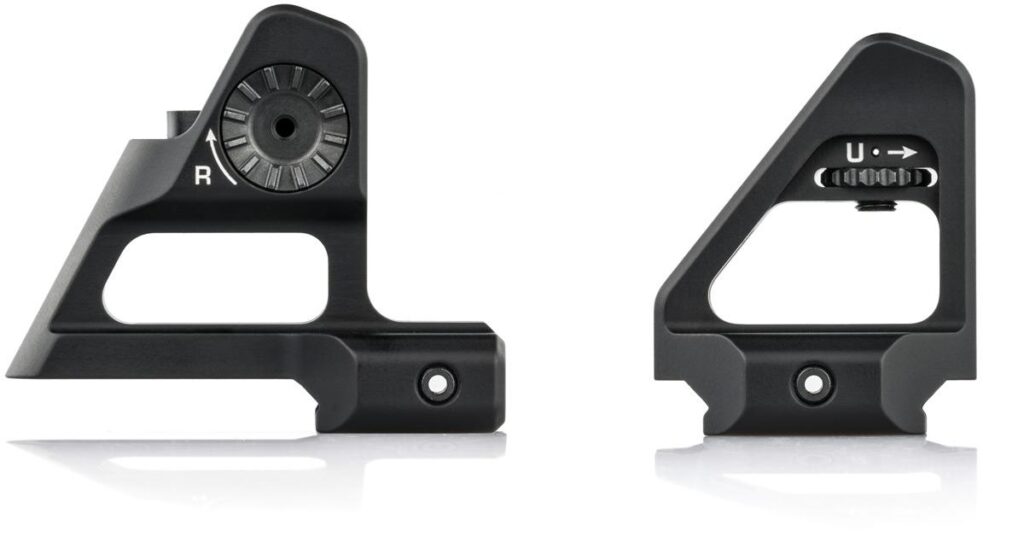
Troy Industries remains a titan in the tactical hardware space, largely because they haven’t chased trends. In 2026, their BattleSight ecosystem is still built on the same “over-engineered” aluminum and stainless steel foundations that made them famous.
If you are trying to navigate their catalog, here is the functional breakdown of the current lineup.
1. Deployment: Folding vs. Fixed
The first choice is whether you want your sights to move.
-
Folding BattleSights (BUIS): These are the most popular. They sit at a low profile (0.460″) when folded and feature a robust, cross-locking detent. You must manually depress a side button to fold them, ensuring they won’t collapse under recoil or impact.
-
Fixed BattleSights: These have no moving parts and are machined from a single block of aluminum. They are lighter and more durable than folding models. They are preferred for “always-on” setups or primary sighting systems.
2. Front Sight Geometry: HK vs. M4
Troy is one of the few brands that allows you to choose your front “tower” style. This is purely a preference for your sight picture.
-
HK Style (Hooded): The front post is surrounded by a circular “globe.”
-
The Advantage: Speed. Your eye naturally centers the circular front hood inside the circular rear aperture (the “circle-in-a-circle” effect).
-
-
M4 Style (Winged): The front post is protected by two flared “ears,” mimicking the classic military M16/M4 profile.
-
The Advantage: Precision. Many shooters find the open top of the M4 wings less distracting for long-range shots.
-
3. Rear Aperture: Round vs. Di-Optic (DOA)
Troy offers two ways to look through the rear of the rifle. Both feature a dual-aperture flip (one for 0-300m and one for 300-600m).
-
Standard Round: The traditional “ghost ring” circle. It is predictable and works well for everyone.
-
Di-Optic (DOA): This features a rhombus/diamond-shaped aperture.
-
The Pitch: Troy claims the four corners of the diamond draw the eye to the center faster than a circle.
-
The Reality: It is polarizing. Some shooters find it much faster for tactical drills, while others find the diamond shape distracting for precision work.
-
4. Height Specs: Standard vs. Micro
This is where most buyers make a mistake. Choosing the wrong one will prevent you from zeroing your rifle.
-
Standard Height: Designed for the AR-15 / M4. If your top rail is at a standard height relative to your stock, this is what you need. It co-witnesses perfectly with standard red dot mounts.
-
Micro Sights: Designed for raised-rail platforms (like the HK416, SIG MCX, or IWI Tavor). Because these rifles have a rail that sits higher above the barrel, standard sights would be too tall. Micro sights are physically shorter to keep your cheek weld natural.
5. Summary of Models & Pricing (2026 Estimates)
Model Category |
Typical Price (Set) |
Best Use Case |
Folding (Standard) |
$200 – $240 |
Backup for Red Dots/LPVOs on AR-15s. |
Fixed (Standard) |
$140 – $160 |
Duty rifles or minimalist “Irons-Only” builds. |
Micro (Folding) |
$220 – $260 |
High-rail rifles (MCX, HK416, APC9). |
Tritium Upgrades |
+$80 – $100 |
Low-light, home defense, or duty use. |
Technical Feature: The “Snag-Free” Mount
All Troy sights (Fixed and Folding) use a recessed cross-bolt mounting system. Unlike cheaper sights that have a large nut sticking out the side of the rail, Troy’s mount is flush. This prevents your sling or gear from snagging on the sights during high-movement transitions.
